7 article(s)
The Framing Effect: Why How Something Is Said Changes What You Decide
Ninety percent fat-free sounds better than ten percent fat, even though they're identical. The framing effect shows how much our choices depend on wording rather than facts.
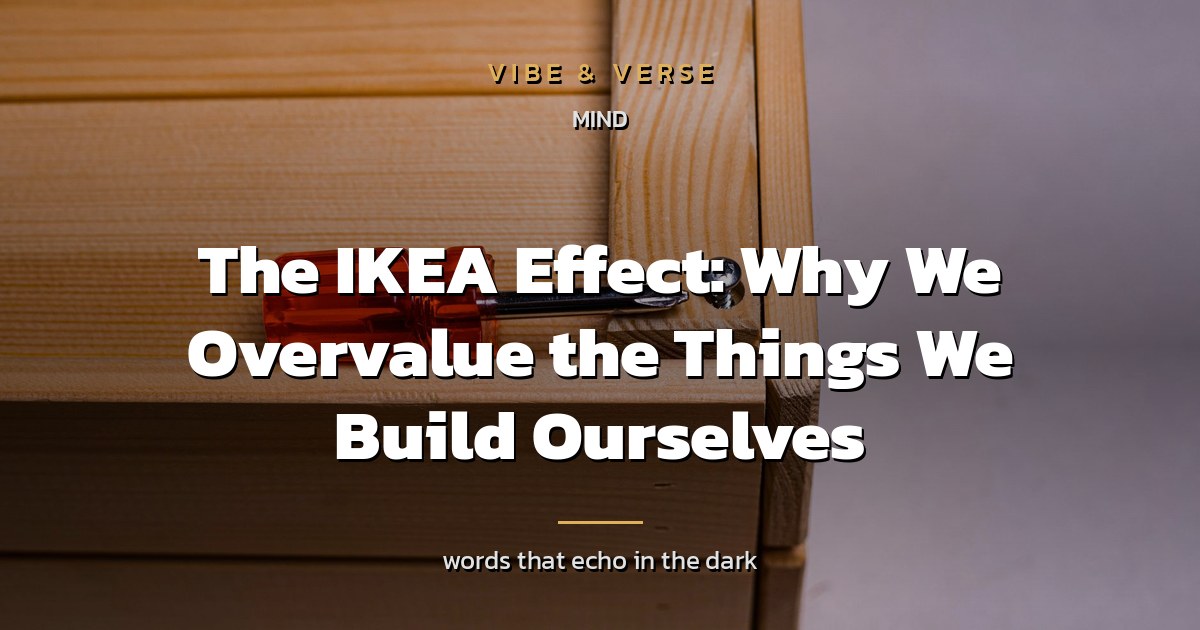
The IKEA Effect: Why We Overvalue the Things We Build Ourselves
We place far more value on things we've had a hand in making — even a wobbly flat-pack shelf. The IKEA effect explains why our own effort can quietly cloud our judgment.
Confirmation Bias: Why We See What We Already Believe
We think we form beliefs by weighing evidence. In truth, we often pick beliefs first, then hunt for evidence that agrees. This quiet bias shapes our politics, purchases, and quarrels.
The Anchoring Effect: How the First Number You Hear Hijacks Your Judgment
The first price, figure, or fact you encounter secretly sets the mental baseline for everything that follows — even when it's completely arbitrary. It's called anchoring.
The Mere Exposure Effect: Why We Like Things Simply Because They're Familiar
A song you disliked at first becomes your favorite. A stranger's face grows attractive over time. We tend to prefer whatever we've simply seen before — and it quietly shapes our choices.
Decision Fatigue: Why Your Willpower Runs Out by Evening
By the end of a long day, you make worse choices — snacking, overspending, snapping at people. It's not weakness. Every decision drains a limited mental battery, and it runs low.
The Sunk Cost Fallacy: Why We Keep Throwing Good Money After Bad
You sit through the terrible movie because you paid for the ticket. You finish the meal you don't want because you ordered it. This one mental glitch quietly costs people careers, relationships, and fortunes.