Why is the night sky dark? The question seems almost too obvious to ask — the Sun has set, so of course it's dark. But look closer and it becomes one of the most profound puzzles in the history of science, known as Olbers' Paradox. The answer tells us something staggering about the universe itself.
The paradox
Imagine the universe were infinite, eternal, and evenly filled with stars. Then no matter which direction you looked, your line of sight would eventually land on the surface of some star. Every single point in the sky should be as bright as the Sun. The whole night sky should blaze with light. And yet it doesn't. It's mostly black. Why?
The failed easy answers
People first guessed that dust clouds must block the distant starlight. But that doesn't work: over infinite time, that dust would heat up and glow just as brightly. The darkness of the night sky was genuinely hard to explain — and that difficulty was a clue that one of the starting assumptions had to be wrong.
The real answer
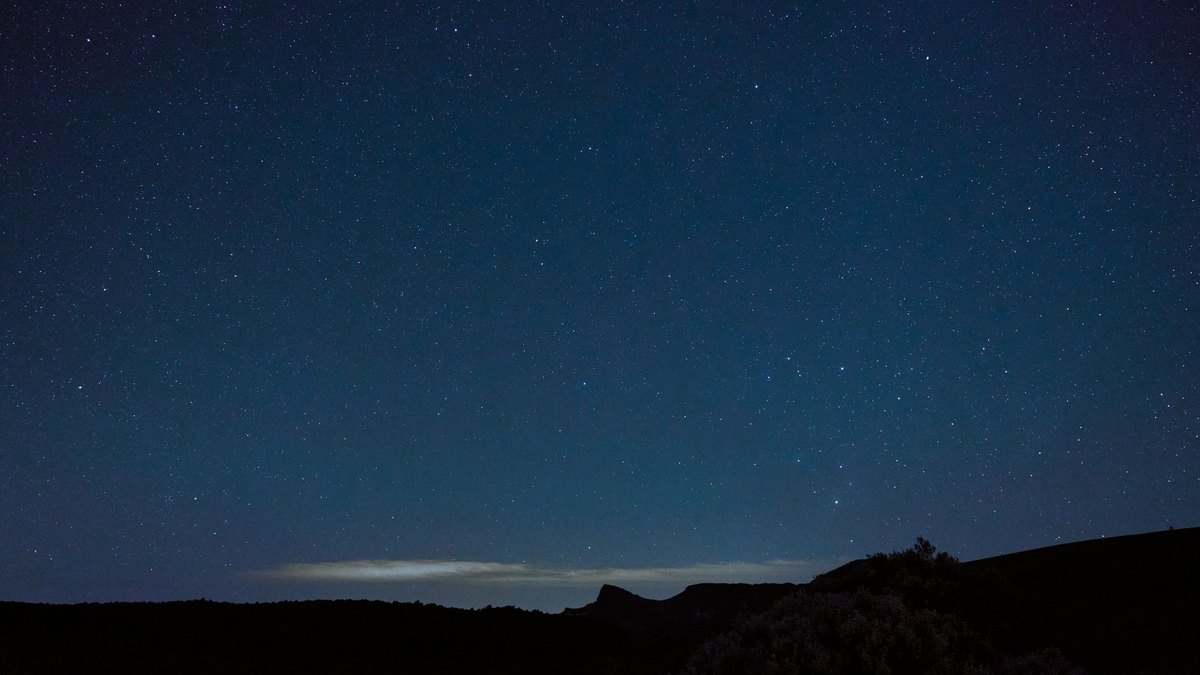
The resolution reshaped our understanding of everything. The universe is not infinitely old — it had a beginning. Because light travels at a finite speed, we can only see stars whose light has had time to reach us, so there simply hasn't been enough time for every direction to fill with starlight. On top of that, the universe is expanding, stretching distant light until it fades beyond what our eyes can see. The night is dark because the universe is young and growing.
Why this is beautiful
Sit with that for a moment. The plain darkness between the stars is not empty and meaningless — it's evidence. The very fact that night is dark is a fingerprint left by the birth and expansion of the cosmos. A child's simple question, taken seriously, points straight to the Big Bang.
That's the quiet wonder of it. Some of the deepest truths about reality aren't hidden in complicated equations you'll never see. Sometimes they're written across the ordinary night sky, waiting for someone curious enough to ask why it looks the way it does.



Be the first to share a thought.