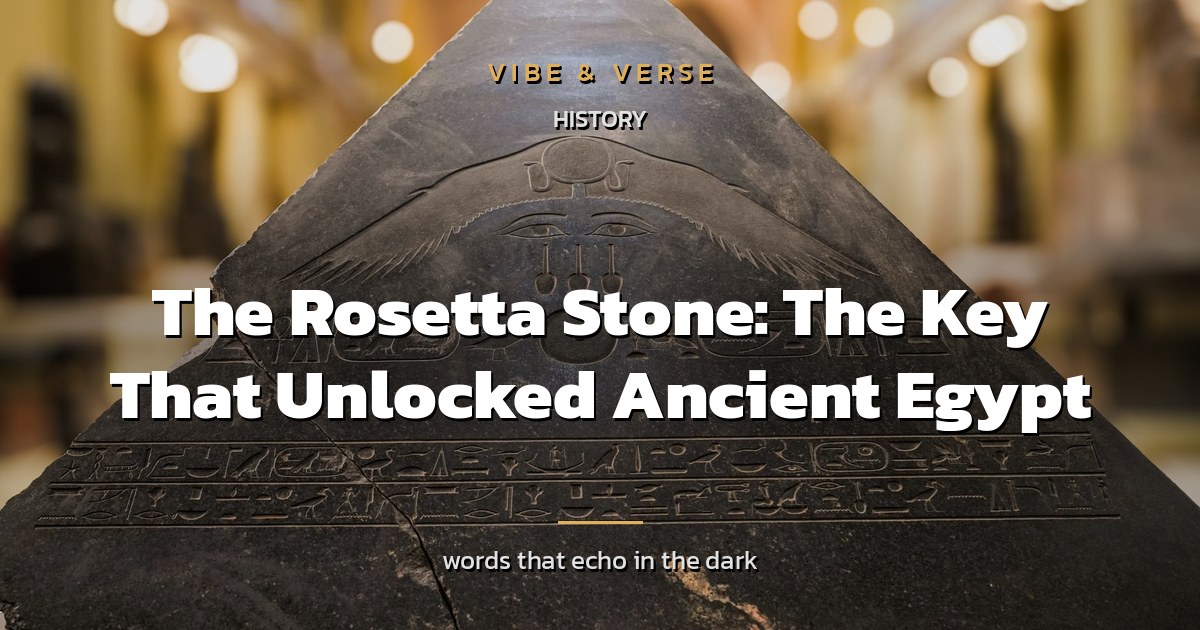
For centuries, ancient Egypt taunted the modern world. Its temples, tombs, and monuments were covered in beautiful hieroglyphic writing — and no one alive could read a word of it. The knowledge had been lost for around 1,400 years. An entire civilization spoke to us from the walls, and we were deaf to it. Then, in 1799, a single broken stone changed history.
A lucky discovery
During a military campaign in Egypt, soldiers uncovered a slab of dark stone near the town of Rosetta. What made it priceless was the writing carved across it: the same text, repeated in three different scripts. There was hieroglyphic (the sacred picture-writing), Demotic (a everyday Egyptian script), and — crucially — ancient Greek, a language scholars could still read.
The key insight
The Greek section could be translated immediately. And since all three passages said essentially the same thing — a decree issued by priests around 196 BC — the Greek acted as a key. If scholars could match the known Greek to the unknown Egyptian scripts, they might finally crack the code that had defeated everyone for centuries.
Cracking the code
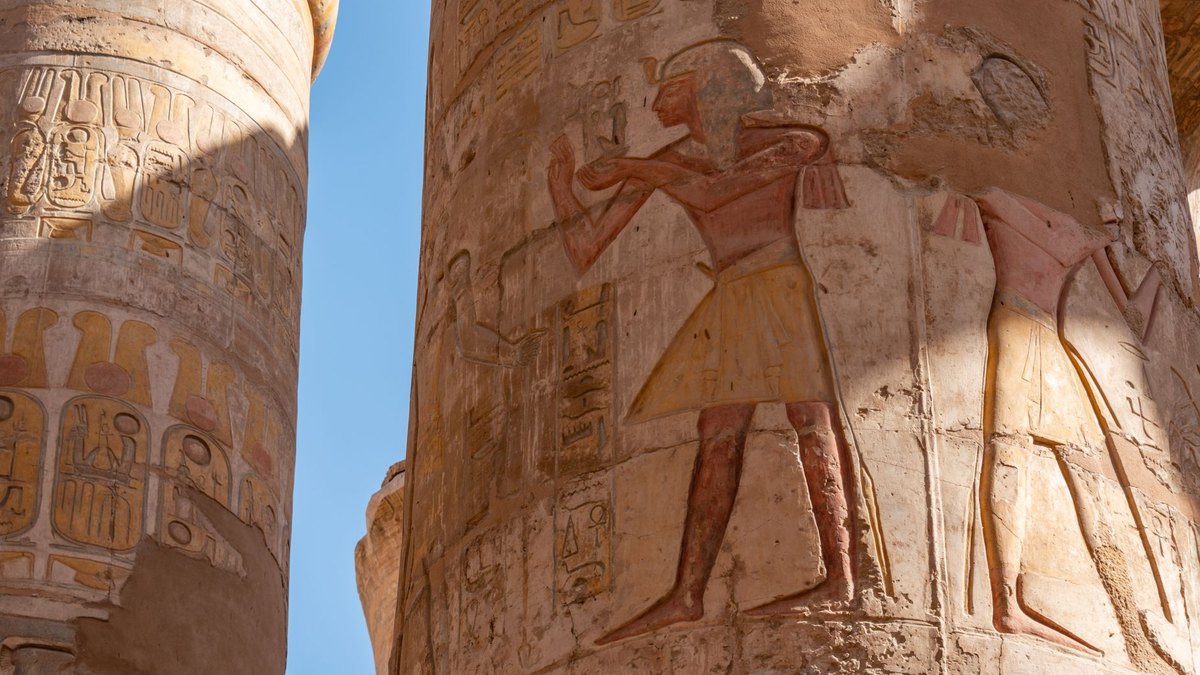
It was not quick or easy. It took more than two decades of painstaking work by several scholars, culminating in the breakthrough of the French linguist Jean-François Champollion in the 1820s. He showed that hieroglyphs weren't purely symbolic pictures, as many assumed, but also represented sounds — a writing system, not just a set of images. With that, the silent script began, at last, to speak.
Why it changed everything
The impact is hard to overstate. Suddenly, thousands of inscriptions, scrolls, and monuments across Egypt could be read. Names of kings, records of daily life, religious texts, and the story of one of humanity's oldest civilizations opened up. The entire field of Egyptology was born from that one act of decipherment.
The Rosetta Stone endures as a symbol of something powerful: the moment a lost voice is recovered. Its very name has become shorthand for any key that unlocks understanding. A chance discovery, a clever insight, and years of stubborn effort gave an ancient people their voice back — and gave us their world.

Be the first to share a thought.